



Donate to PAPAA
All this information is available to you FREE. If you found it useful please show your appreciation. Thank you.
You have no items in your basket
 Donate
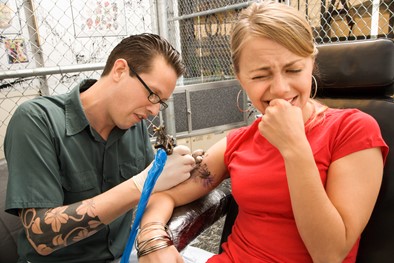
Nowadays, it seems that almost every TV celebrity and sports star parades some form of body art, especially tattoos. Among professional footballers, having at least one arm fully tattooed seems to be de riguer. Historically, there was a strong element of class stigma associated with tattoos and some still think having a tattoo is confirmation of working-class status. Others, however, see it as an attractive form of self-adornment which transcends class-divisions. But whether you are for or against, there is no doubt that attitudes towards tattooing in the UK have changed significantly over the last 50 years. Just 7% of people born in the 1950s are likely to have a tattoo compared with 42% of people born in the 80s and 90s.
 Of course, tattooing has been around for a long time – a very long time. The oldest known human to have tattoos preserved upon his mummified skin is a Bronze-Age man from around 3300 BCE. He was found in 1991, in a glacier of the Ötztal Alps, near the border between Austria and Italy. “Ötzi the Iceman” has no fewer than 61 tattoos, which are in remarkably good condition given the circumstances – proving that tattoos can age well.
Some consider the birthplace of modern tattooing to be New York City, because it’s where the first professional tattoo artist, Martin Hildebrandt, established himself by tattooing Civil War soldiers for identification purposes. His protégé, Samuel F. O’Reilly was also a key figure in tattooing history and is credited with inventing the electric tattooing machine, which came into use in the late 1880s.
Today, the United Kingdom is the most tattooed nation in the world, with an estimated 30% of 18–35-year-olds having at least one tattoo. According to a recent survey, Birmingham is the most tattooed city in the country, with close to half (48%) of the population having tattoos1.
What are the risks of getting tattooed?
There are general risks of tattooing which are not specific to people with psoriasis. These include:
But the complication most relevant to people with psoriasis is, the Koebner phenomenon.
Koebner phenomenon
People with psoriasis and some other skin diseases like lichen planus and vitiligo, are most at risk for a skin reaction known as the Koebner phenomenon (also known as the isomorphic response). It was first described by the 19th century German dermatologist, Heinrich Koebner (1838-1904). With this condition, new skin lesions – similar to those of the diseased skin - appear on normal, healthy skin. This usually occurs following trauma such as scratches, cuts, abrasions, or burns, to the normal skin and – of course – tattooing. So, a tattoo in an area of skin not normally affected by psoriasis, can develop psoriasis-like lesions.
In fact, the Koebner phenomenon can occur in any anatomical site, including the face. Even mild trauma to the skin, such as from very tight waistbands or heavy shoulder bags can be enough to cause a Koebner response.
The cause of the phenomenon is not entirely clear but recent evidence suggests that specialised “tissue-resident memory” (TRM) cells may be involved. These cells may cause the body to respond inappropriately to perceived threats – like scratches and tattoos – by releasing inflammatory molecules which are involved in the development of psoriasis.
Fortunately, in most cases the Koebner response – if it occurs - is relatively short-lived and easily treated.
What does the scientific evidence tell us?
In recent years - probably because of the rapid rise in the popularity of tattooing - scientists have started to pay much more attention to the potential risks (and benefits) of tattooing for those with psoriasis. What do they tell us? Three recent studies actually reveal quite a lot.
Study 1
In this 2016 study, researchers carried out an internet survey of 90 psoriatics, to determine their attitudes towards tattoos, their motivations, and the incidence of complications2. 52% (48/90) had one tattoo or more and – unsurprisingly they were younger than the non-tattooed individuals. Of the tattooed subjects, 13 (27.6%) experienced a Koebner reaction on their tattoos, though in only 4 cases did this occur within weeks of tattooing. In the remainder, it occurred anywhere from months to years after tattooing, Fewer than 7% reported a psoriasis flare-up on another part of the body after tattooing. It’s also worth noting that 91.5% (43/47), did not discuss their wish to get a tattoo with their doctor, but 43.5% (20/46) alerted their tattooist to their psoriasis. Importantly, 82% stated that their tattoo(s) had a positive effect on their body image.
Study 2
In this large (2020) study, researchers from multiple locations in France, aimed to evaluate the frequency of tattoo complications in people with psoriasis and determine whether the occurrence of complications was associated with psoriasis status and treatments received at the time of tattooing3.
 A total of 2053 adults with psoriasis were included and classified as tattooed or non-tattooed. Prevalence of complications associated with tattoos was then evaluated according to psoriasis onset and treatments. Data were collected through a series of questionnaires filled in by a dermatologist. Complications included itching, allergic reactions, infections, swelling, psoriasis flare and Koebner phenomenon.
Of the 2053 participants, 414 (20.2%) had a total of 894 tattoos. Among psoriatics without tattoos, 252 (15.4%) had wished to have a tattoo but never received one. Amongst these people, 111 (44.0%) did not have a tattoo, either because of their psoriasis, the treatment for their psoriasis or due to negative advice from their doctor. Finally, 93 (5.7%) of the non-tattooed individuals planned to have a tattoo in the future.
Local complications, such as oedema, pruritus, allergy, and Koebner phenomenon, were reported in tattoos in 58 (6.6%) subjects, most frequently in those with psoriasis requiring treatment at the time of tattooing. Koebner phenomenon occurred in just 26 (3%) and tattooing caused psoriasis flare-up in 29 (3.2%) of cases, independently of the occurrence of Koebner phenomenon. No severe complications were reported. It’s notable that the risk of complications, whilst low, was higher in those undergoing active treatment for psoriasis, especially with biological agents.
Study 3
In the third study (2022), this time from Poland, researchers conducted an anonymous, online questionnaire-based study in order to assess how much those with psoriasis know about tattooing and its potential complications4. They enrolled 150 tattooed psoriatics between April and September 2020.
 Of 150 respondents, 134 were female and 16 were male, with an age range of 16-62 years with a mean age of 32 years. Most respondents received their psoriasis diagnoses before getting tattooed (114/76%), whereas 36 (24%) were diagnosed afterwards. Interestingly, only 8% (12) had a dermatological consult before getting their tattoos, and only 18% of respondents reported that the tattoo artist had recommended a dermatological consult prior to tattooing. Investigators reported 101 (67.3%) of respondents were undergoing active treatment for psoriasis while being tattooed.
Overall, tattooing complications for people with psoriasis were mild and more prevalent during active disease or with systemic treatment. Only 13 (8.7%) of respondents had tattoo-associated cutaneous complications, with Koebner phenomenon most frequent (8/5.3%). In one of these cases, the tattoo was the first onset of psoriasis. Only two respondents (1.3%) reported a general flare-up of symptoms and just two reported an itchy rash at the site of the tattoo.
What can we say from the evidence?
All three studies have important information, not just for anyone with psoriasis who may be considering a tattoo, but for any health-care professional or tattooist who may be asked to advise psoriatics about the associated risks. Below are the key points we can take from the three studies considered above:
Practicalities – what to do if you want a tattoo.
On the basis of the scientific evidence, there is no reason why you shouldn’t consider having a tattoo if you have psoriasis. Overall, you can be reassured that the risks are small – though not irrelevant.
So here are three sensible precautions to take before going ahead.
Date created: 16 December 2022
References
All this information is available to you FREE. If you found it useful please show your appreciation. Thank you.

Read the stories